
Mark’s Score 9.1
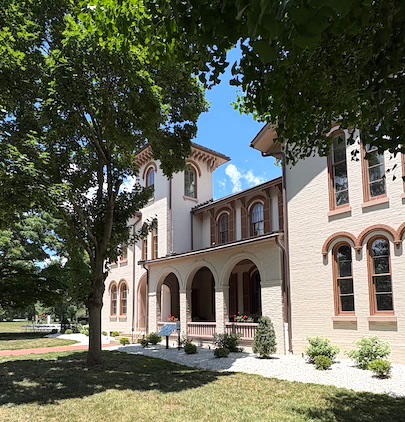
The Governor Ross Mansion embodies both my fascination and frustration with Delmarva’s small-town museums. I have been trying to visit this museum for the past six months. It took me four attempts to finally find a time when they were open. But I was anxious to see it both for its architectural charm and its historical significance.
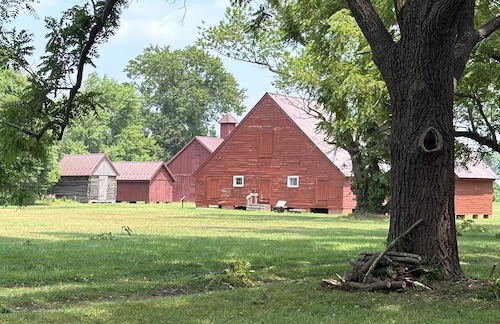
The Seaford Historical Society purchased the mansion in 1976 and it opened as a museum in the early 80s. The mansion was built by William Ross in the 1850s. Ross was a wealthy farmer and a governor of Delaware from 1851-55. The mansion is one of the few examples of Italianate design on the peninsula and served as the manor house for the Ross plantation, which at one point covered 1,398 Acres (566 hectares). Ross was noted for two things; 1) he was a slave-owner who supported the Confederacy who fled to England during that war, and 2) he was instrumental in bringing the railroad to southern Delaware. The introduction of the railroad allowed local farmers to switch from growing grains to more profitable fruits and vegetables.
When I arrived, the docent had just begun a guided tour, which begins at the front door. Fortunately, I had arrived only a few minutes after she began so I was able to join the tour already in progress. The museum does not allow patrons to wander freely through the property. The museum is presented as a “guided historical-house experience,” with tours lasting 1.5 to 2 hours. The mansion is small, as far as mansions go, so I had not planned on spending so much time at this museum.
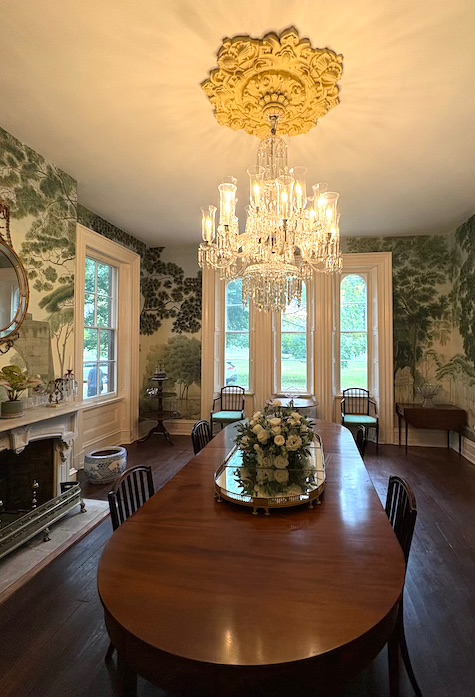
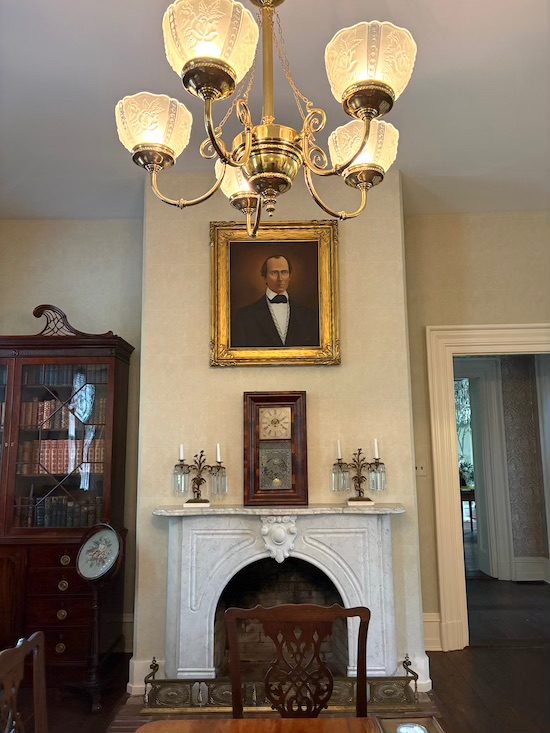
It would be impossible to cover the entire tour here. But as a general description I would describe it as a personal walk through the lives of William Ross, his family, and the townspeople of Seaford in the mid-nineteenth century. As you walk through each room, the impressively informed docent highlights certain items and uses those items to illustrate an aspect of life during the period just before and after the Civil War. The tour begins in the family parlor, winding its way through the dining, kitchen, bedrooms, and ending back at the formal ballroom on the first floor.
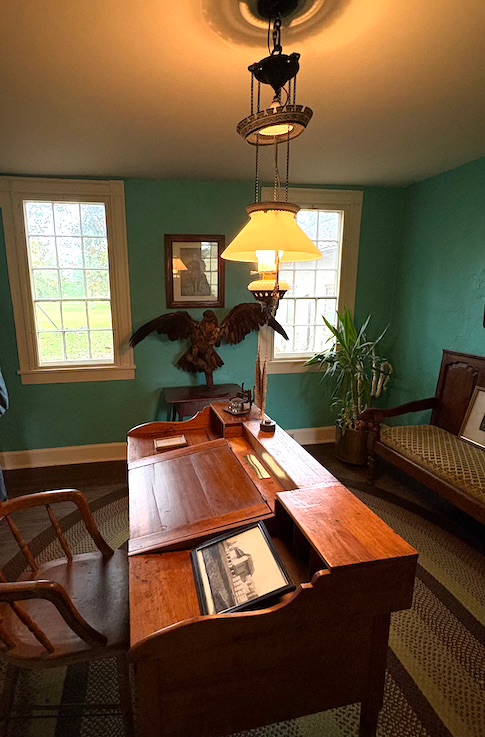
I often talk about how small-town museums help put into context the Delmarva of today. I generally prefer the less themed museums, but the house centered museums such as this, the Ker in Onancock, and the Teackle in Princess Anne demonstrate the sharp differences between the historical context of ship captains in my native New England from the historical context of slavery here on the Delmarva. We may be one nation, but our histories are very different.
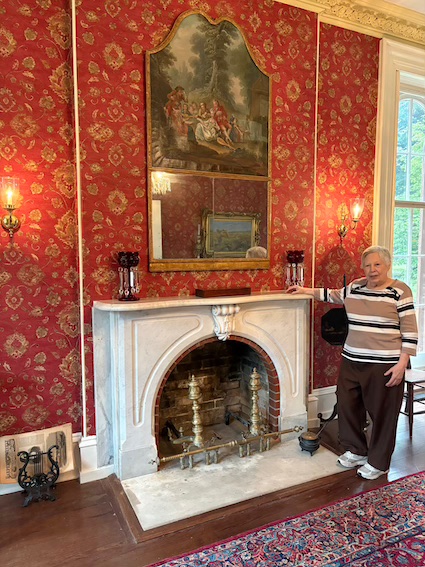
In the end, this museum was worth the wait. My objective in visiting these museums is to come away with a better understanding of Delmarva. This is not merely a big house full of old furniture. This museum expertly weaves a story of rural southern life, the house is merely the prop used to tell that story.
What else is there to do in Seaford?
Don’t want to miss any of my posts? You can follow me on my Facebook Page.
Leave a Reply