
Mark’s Score 8.9
History was my favorite subject in school. Growing up in New England, was like living in a history museum. When it was time to retire, we chose Delmarva because of its rich history. My love of history is why I am passionate about small-town museums. I have visited dozens of small-town museums on my Delmarva journey. These museums have taught me valuable lessons about Delmarva, none more so than the Richardson Maritime Museum.
The Richardson Maritime Museum has an interesting backstory. The museum was founded shortly after the death of James Richardson in 1992. The museum moved to its current location on Cambridge Creek in 1996. The mission of the museum is to preserve Richardson’s legacy of continuing traditional wooden-boatbuilding skills. Throughout his life Richardson trained many young craftsmen, thus perpetuating the Chesapeake Bay’s boatbuilding culture. Richardson’s knowledge of local boatbuilding techniques was so vast and renowned that he became an important resource for James Michener in his research for his book, Chesapeake.
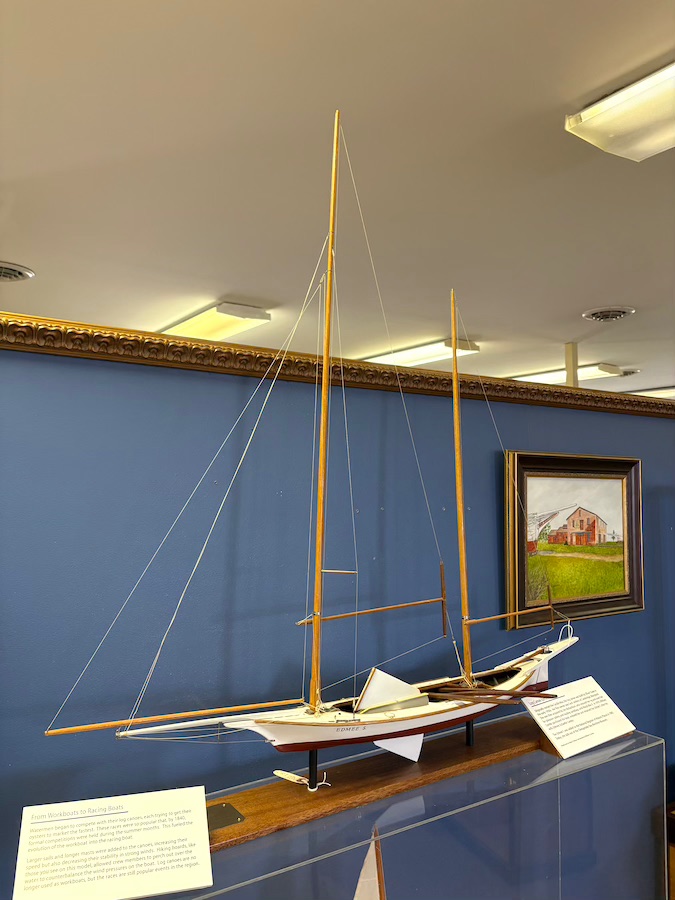
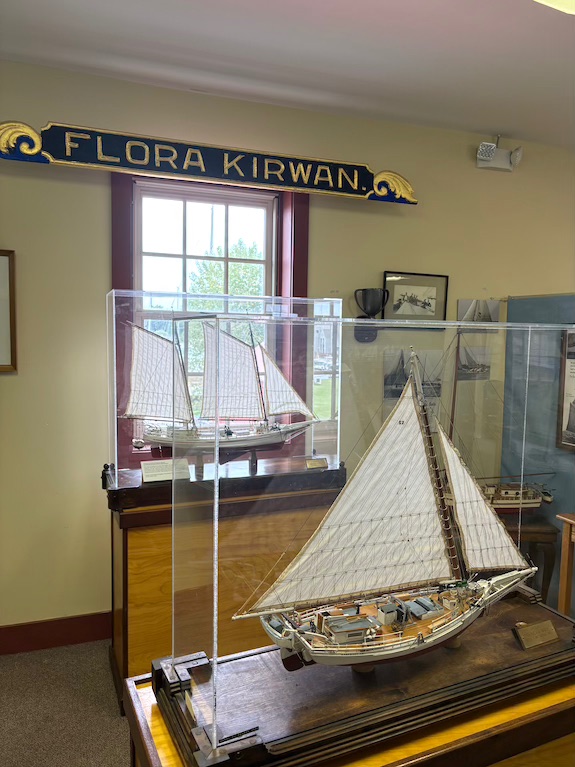
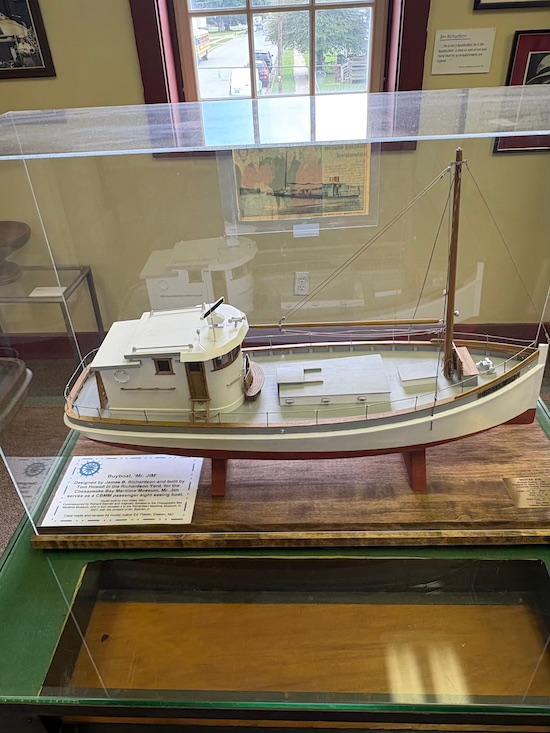
The museum is only open for a few hours, four days a week. It has taken me some time, but I was finally able to coordinate my schedule so that I would be in Cambridge on a day and time when the museum was open. The museum is located in two old boat sheds on the waterfront. The main exhibition area is on the second floor of the building nearest the street. When I first walked in, on first blush, I mistakenly thought it was a museum of model boats. The museum has a collection of over 50 boat models of Chesapeake Bay’s most iconic water craft; skipjacks, bugeyes, schooners, and crabbing boats, to name a few.
I walked around for just a few minutes, reading the posters and admiring the models, when the very helpful docent walked up to me, and started to tell the story of James Richardson. Within ten minutes he had provided me a wealth of information about boatbuilding on the Chesapeake and the role Richardson played in preserving and promoting the tradition of boat building on the Chesapeake.
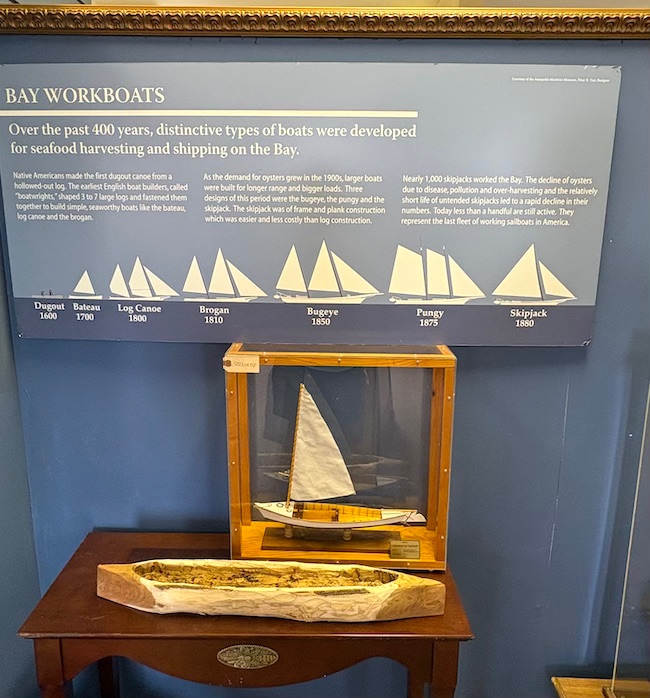
I happened to be standing in front of the Bay Workboats display when the docent caught up to me. I learned that the beginning of the boat building industry on the bay goes all the way back to Native American dugout canoes, and that in the early days boat construction was based on native American dugout canoe construction.
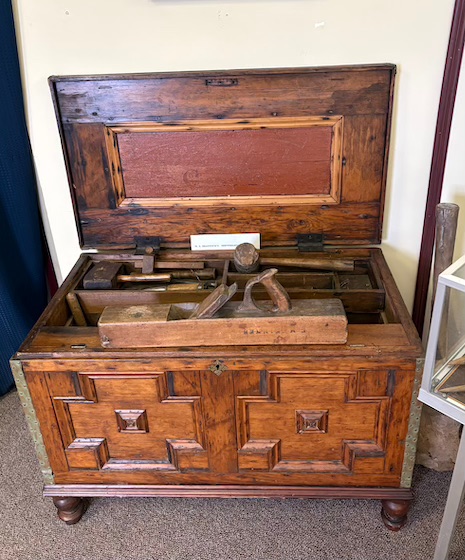
There were only two other guests on this particular day so the docent offered to take us to the Rourke Boatworks. The Rourke Boatworks is part of the museum but it is still a functioning boatworks. At the time of our visit, there was a boat under construction, so we got a firsthand look on how boats are built, using traditional techniques.
I wasn’t expecting much when I entered this museum. I walked away with a better understanding of the significance of boat building on the bay and Richardson’s contribution to continuing that tradition. What more could you ask of a museum?
What else is there to do in Cambridge?
Don’t want to miss any of my posts? You can follow me on my Facebook Page.
Leave a Reply