
Mark’s Score 8.7
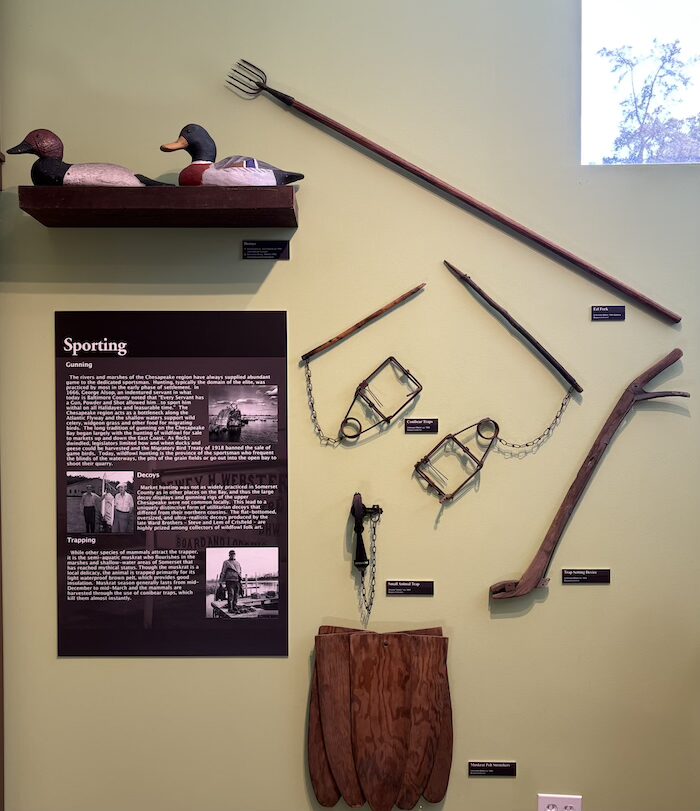
I have been driving past this museum for years, yet I had no idea that it even existed. You won’t see it from the road. Its icon will not appear on Google Maps unless you zoom in, and there are no signs indicating its location. I learned about this museum from the people at the Allen Museum. I had mentioned to them that I am on a mission to learn about Delmarva by visiting small-town museums. They insisted, that Burgess was a must stop on my quest, and they were right.
As is the case of many small-town museums, the Burgess Museum has its genesis in the personal collection of local resident, farmer and amateur historian, Lawrence Burgess. Burgess started collecting artifacts that represented everyday rural life on the lower Eastern Shore. In 1976 Burgess and his wife Gladys opened the Burgess Early Americana Museum on their property. Their museum contained 24,000 artifacts, illustrating how people farmed, lived, and worked at the turn of the last century. When Lawrence died in 1999, the family and local officials worked together to preserve and make accessible the Burgess collection. In April of 2022 the Burgess Rural Living Center was officially opened at the Somerset County Tourism Welcome Center.
As I had mentioned, this museum is hard to find, it is also very small, tucked in the back of the tourism welcome center. But though it is small, and only displaces a small portion of the Burgess collection, I was pleasantly surprised to discover that this is one of the best and most professionally curated collections that I have seen on my small-town museum tour. Better still, this museum does an excellent job highlighting those aspects of life and work in the late 1800s that continue to impact who and what Delmarva is today.
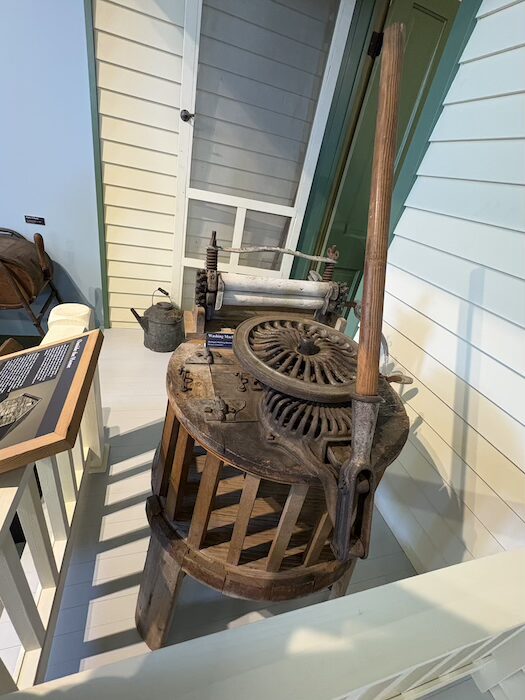
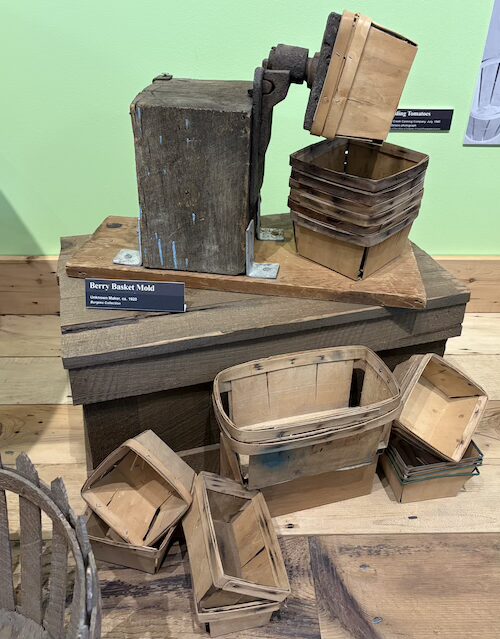
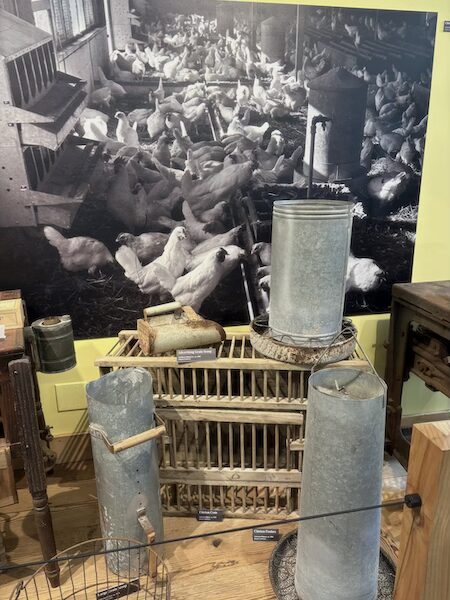
There are the usual exhibits covering, oystering, and the truck crops and canning industry that shaped the modern economy and culture of Delmarva. There were also displays depicting living conditions and household implements at the turn of the last century. But for me, the most fascinating exhibit focused on our poultry industry. Delmarva is well-known as one of the nation’s leading poultry producing areas, Purdue is headquartered in Salisbury. But why did the poultry industry locate here? Apparently, the genesis of this industry was the consequence of a clerical error. In 1923 Sussex County resident, Cecile Steele earned a few extra dollars by selling eggs. One day she mistakenly ordered 500 (instead of 50) laying-chickens. She sold the 450 extra chickens for $0.62 per pound, from which she made a handsome profit, and so the modern poultry business on Delmarva was born. Today there are approximately 45,000 chickens housed in Somerset County alone.
This museum hits all my buttons. The museum is well laid out and professionally curated, but most importantly, I walked away having learned about my adopted home. This museum does an excellent job of putting today into historical context; can you ask any more of a history museum?
What else is there to do in Princess Anne?
Leave a Reply