
Mark’s Score 8.9
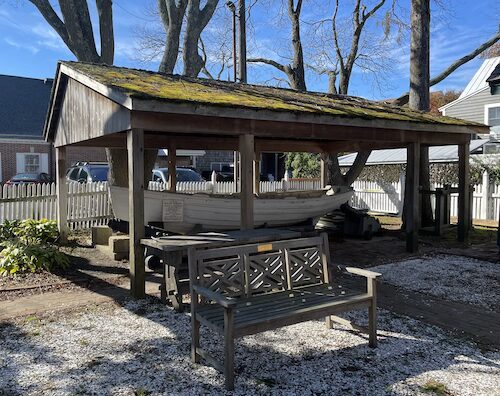
Lewes is in a class by itself, when it comes to beach communities on the Delmarva. It is the only beach town with a long history that extends well before the railroads. Most beach towns in the Mid-Atlantic only came into existence when the railroads put them within a single day’s train ride of the big east coast cities. But Lewes has a history stretching all the way back to the early 1600s.
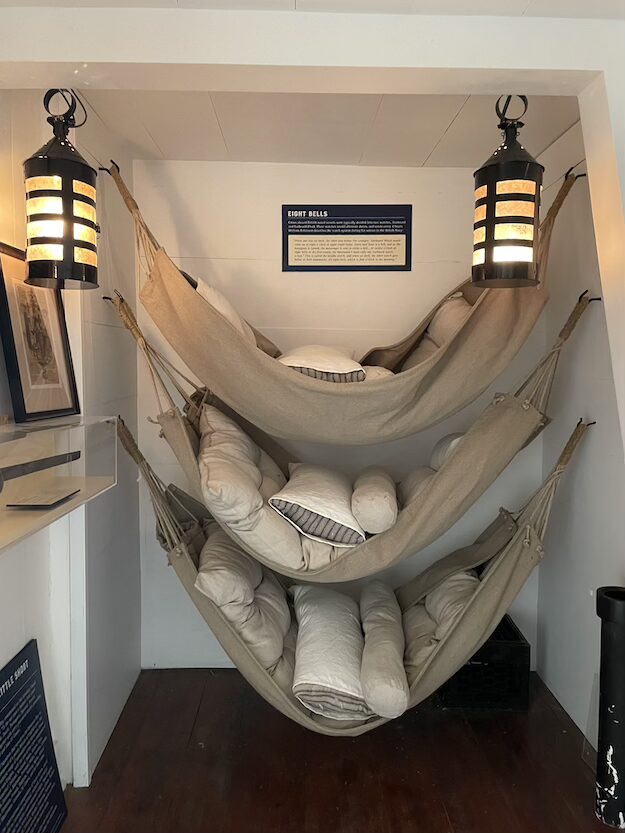
With the summer over, I made my first trip to Lewes since last spring. It was a beautiful day I was walking down Front Street when a small group of people in front of me turned up the staircase to walk into Cannonball House. Having nothing better to do, I followed. The docent had already begun a tour, but he encouraged us to tag along.
The Maritime Museum is owned by Historic Lewes, the new name for the Lewes Historical Society. The Society was formed in 1962 in an attempt to save a number of historic structures that were under threat. In addition to the Cannonball House, Historic Lewes also owns a number of structures in the “Town Campus,” the Ryves Holt House, and the US Life-Saving Station Boat House Museum. Historic Lewes acquired the Cannonball House in 1963, and it now serves as the home of their Maritime Museum.
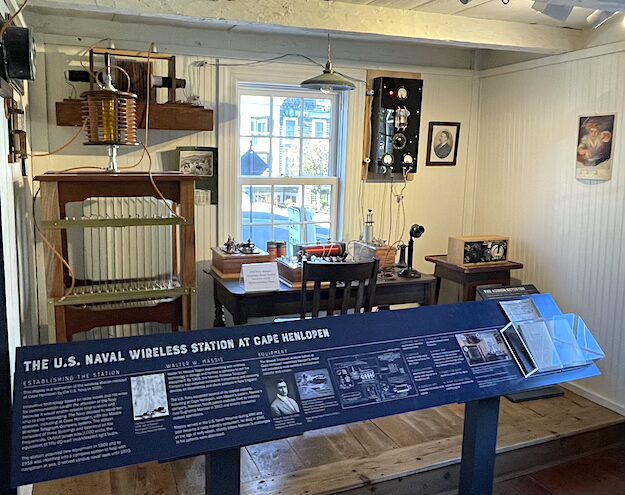
On the day I visited, the docent was giving a lecture on their Wireless display. I have to say it was one of the most entertaining and unusual presentations I have observed in some time. The focus of the talk was on electromagnetism and role it played in communicating messages across a wireless. He handed an EMF recorder to a woman in the group. For those of you who are not into ghost reality shows, EMF stands for electro-magnetic field. All electronic devices (and ghosts) create an electromagnetic field. He had the woman hold the device in front of the wireless before and after the wireless was turned on, in an attempt to demonstrate how the wireless creates an electromagnetic field. He then had the woman point the device at a locked door to her left. He explained that a ghost named Sally lives behind the locked door. Apparently, she was not home, as the EMF recorded no emissions.
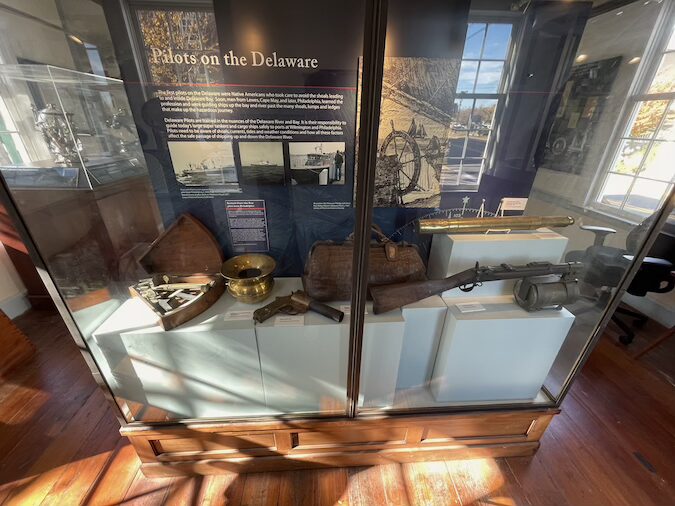
The Cannonball House is called the Cannonball House because it suffered sever damage in the War of 1812, when the British Navy bombarded Lewes for 22 hours. The British bombarded the town from barges just off the shoreline. Many buildings in the town were damaged. To this day they still retrieve cannonballs from structures around town. There is a nine-pound iron cannonball on display at the front entrance.
I don’t think I was at the maritime museum for even 30 minutes, but I was thoroughly entertained and I learned a great deal about the wireless, the British naval bombardment, and ghosts in that short period of time. It was well worth my time, and best of all it was free.
What else is there to do in Lewes?
Leave a Reply